OFFER: A BRAND NEW SERIES AND 2 FREEBIES FOR YOU!
Grab my new series, "Regency Hearts Entwined", and get 2 FREE novels as a gift! Have a look here!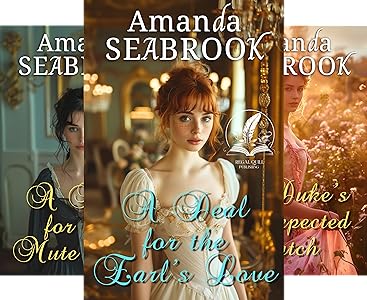

Chapter One
“Must you pull the ribbon so tightly, Mama? I shall suffocate before I ever reach London!” Charlotte Harcourt heard her sister Arabella’s protest as it rang through the Harcourt front parlor with theatrical despair.
“It is not the ribbon, my love,” her mother, Lady Dorothea Harcourt, the Countess of Nortleigh replied, frowning at the beleaguered seamstress. “It is your posture. A lady cannot hope to make an impression with her shoulders slumped like a milkmaid’s.”
“My posture is exquisite,” Arabella insisted, lifting her chin with swan-like pride. Her chestnut hair was pinned to perfection, and her cheeks were pinched to a delightful shade of pink, by the expert hands of their mother. “I merely object to being trussed like a Christmas goose.”
Mrs. Denning, the senior seamstress, muttered something inaudible, which Charlotte suspected was not a compliment, and reached again for the shimmering blue silk strewn across Arabella’s lap.
The room itself fluttered with enough fabric to outfit a regiment. Ribbons draped the armchairs like defeated soldiers, while fashion plates littered every table surface. A footman had nearly slipped on a cascade of lace only moments earlier. Even now, Arabella presided over the chaos as though she were queen of some silken, frivolous kingdom.
Charlotte, perched in her habitual window seat, moved a knight across her father’s worn chessboard.
“You are brooding again, Charlotte,” Arabella declared without turning. “Whenever you make that face, a bishop is about to meet an untimely end.”
“I assure you,” Charlotte replied mildly, “my bishop is perfectly safe.”
Their mother glanced over, distracted only briefly from adjusting Arabella’s bodice. “Do try to look more animated, Charlotte. A young lady’s thoughts ought not to be so very grave.”
“My thoughts,” Charlotte corrected her, “are merely organized.”
Arabella sighed the sigh of a woman destined to endure constant misunderstanding. “One day, Charlotte, you must allow me to fashion you into something more agreeable. I could transform you entirely if you would only submit to a little effort.”
“I fear the world is not prepared for such a transformation,” Charlotte murmured.
Mrs. Denning’s needle paused mid-stitch, in a subtle tremor of amusement.
Arabella, however, sailed on. “In London, everything depends on first impressions. Why, Lord Pembroke himself said—”
“Lord Pembroke,” Charlotte interjected, “once declared that gooseberry jam improves one’s complexion. I am not certain he should be our authority on anything.”
Their mother lifted her hand in a gesture of mild reproach. “Charlotte, your sister speaks sensibly. Her first Season is of the utmost importance.”
Charlotte did not argue, for she knew it well enough. Arabella’s triumph in society was the family’s brightest hope. The estate’s decline, whispered through servants’ corridors and hushed among relatives, pressed upon them all like a storm cloud. Their mother pinned every aspiration upon Arabella’s beauty and Arabella, with dramatic devotion, bore the burden as though it were a bejeweled crown.
Yet Charlotte, watching the bustling room, felt that there were too many ribbons, too many voices and far too many expectations. Here in the window seat, the chessboard offered a sensible refuge. Every piece had its proper movement, and every outcome was shaped by forethought rather than flattery.
Arabella broke into her reverie again. “Charlotte, truly, must you sit there like some ghost haunting the draperies? Do say something useful.”
“What would be useful?” Charlotte asked.
“An opinion on this gown!” Arabella spread her arms, causing the seamstresses to recoil lest the silk tear. “Is it not divine? The very shade of London sky on a clear morning.”
Charlotte regarded the gown thoughtfully. “It is lovely,” she said at last. “Though I believe London skies are rarely so obliging.”
One of the younger seamstresses hid a smile behind her pin cushion.
Their mother exhaled sharply. “Charlotte, you must cultivate optimism. If Arabella is to attract the right sort of attention, we must all think positively.”
“I am entirely positive,” Charlotte said. “I am positive that London’s weather cares nothing for our expectations.”
Arabella rolled her eyes so dramatically that the motion itself could have been fashionable. “How shall I survive an entire Season if my own sister refuses to support me?”
Charlotte set down a pawn. “I shall support you in every reasonable way.”
“Reasonable?” Arabella gasped. “You speak as though I were requesting a miracle, not merely admiration.”
Before Charlotte could respond, the parlor door opened and their father, Edmund Harcourt, the Earl of Nortleigh, entered in his usual amiable and distracted manner. Already, he was defeated by the avalanche of silk.
“My dear,” he said, blinking at the chaos, “I was told we required a signature for the milliner’s account.”
Lady Harcourt seized the papers from his hand before he had fully crossed the threshold. “Yes, yes, sign here. Arabella’s presentation gown cannot wait.”
Lord Harcourt fumbled for a quill. “Is there to be any money left for—”
“No.” Lady Harcourt’s voice sliced cleanly through the question. “Do not trouble yourself.”
Charlotte watched her father’s mild protest dissolve. It always did. But it seemed that he said something else to say, as he cleared his throat louder than necessary, which immediately drew the attention of the entire room.
“My dears,” he said, addressing his two daughters and gesturing to the chairs near the hearth, “might I have a word with you? Both of you. It is … well, of some significance.”
Arabella brightened instantly. “Is it about my gowns? Oh, Papa, do say the embroidery may be upgraded. Mrs. Denning insists there is no time, but surely—”
“No, no, nothing of that sort,” he replied, waving away the topic as though physically batting aside silk. “Please, be seated.”
Lady Harcourt straightened, eyes sharpening with calculation. “Edmund, you look positively stricken. If this is about money—”
“For once,” he interrupted, “it is not about money.”
A rare remark, and thus as sacred as a comet.
Charlotte closed her chessboard and moved from her window seat. Arabella swept to the nearest chair as though taking her place upon a throne, while Charlotte settled into the quieter one beside it, careful not to disturb the heap of ribbons that had claimed the armrest.
Lord Harcourt clasped his hands behind his back with a sort of solemn pride. “I have received a communication this morning from Lady Evelyn Sinclair.”
Arabella gasped. “The Sinclair family? Of Ashcombe?”
“Yes, yes,” he said, nodding vigorously. “Very distinguished people. Old title. Considerable estates.”
Lady Harcourt’s relief unfurled so visibly that even the seamstresses exchanged a knowing glance. “Then they have taken notice at last,” she murmured, almost to herself.
Arabella pressed a hand to her heart. “Are they to host a ball? Or sponsor my presentation? Mama, imagine if the Marquess himself—”
Lord Harcourt coughed. “Uhm, well it is something rather more consequential, Arabella. Lady Evelyn writes with the intention of forming an advantageous alliance between our families.”
Arabella blinked. “Alliance?” Then again more slowly, as the meaning dawned. “A marriage alliance?”
“Yes.” He nodded with the expression that of a man bestowing a crown rather than delivering an arrangement. “Lady Evelyn proposes that her son, the Marquess of Ashcombe, should consider you, Arabella, as his prospective bride.”
A hush swept the parlor, soft as falling lace.
Then Arabella erupted with triumph. “Me? Papa, truly? Me?” She turned to her mother, radiant as though a dozen chandeliers blazed behind her. “Mama, did you hear? A marquess!”
Lady Harcourt breathed out a sigh of triumph. “It is everything we have worked toward.” She reached for Arabella’s hands, her voice trembling with satisfaction. “Oh, my darling girl, you shall restore our family to its rightful standing.”
Charlotte sat very still.
She had, of course known that Arabella’s Season was to be a parade of suitors, a battleground where beauty was both weapon and shield. She had prepared herself for it. She had told herself again and again that she was content in her quiet corner of the household, in being the overlooked sister, the sensible one, the dependable one. And yet …
Lord Harcourt, noticing Charlotte’s silence, gestured vaguely in her direction. “A splendid development for us all, is it not? The Sinclair fortunes are considerable, and their influence reaches well beyond London. Why, with Arabella so advantageously settled—”
“We shall all be secure,” Lady Harcourt finished. “Charlotte included.”
Arabella, still glowing with the triumphant energy of a general surveying conquered territory, suddenly shifted her gaze toward Charlotte. The brightness in her eyes was dazzling, yet beneath it, Charlotte saw a thin, quivering line of uncertainty.
“Charlotte,” Arabella said lightly, though her fingers twisted a ribbon into nervous knots, “do you suppose Lord Ashcombe will find me … sufficient?”
Charlotte blinked. “Sufficient?”
“Beautiful enough,” Arabella clarified, though she pretended it was a frivolous question. “The Sinclair name is frightfully grand. One hears such things about London standards. I should hate to disappoint.”
Their mother tsked. “Nonsense, Arabella, you are perfection itself.”
Arabella did not look at her mother. She looked directly at Charlotte, as she always did when she wished for truth she would later resent.
Charlotte drew a quiet breath. “Arabella, your beauty has never been in question. I imagine even Lord Ashcombe will not be entirely immune.”
Arabella scoffed, though relief flickered over her features. “Yes, well. It would be rather inconvenient if he proved blind. But even so, Papa said he is a solemn sort. A marquess and former cavalry officer. He may prefer a more … serious face.”
Charlotte smiled faintly. “Even serious men have eyes, Arabella.”
“Perhaps blindness would be a convenient flaw for you, Charlotte,” Arabella added under her breath, almost dismissively. “No one ever looks at the second sister, anyway.”
Charlotte forced her expression not to change. She was used to such remarks, such little darts thrown without aim, yet always finding their mark.
Arabella reached for her suddenly, clasping Charlotte’s wrist. The pressure was sharper than expected, and Charlotte stiffened.
Arabella leaned close, her voice a strained whisper meant only for her sister. “Charlotte, listen to me. This is my chance. My only chance. Everything Mama has planned, all of our futures depend upon this match.”
Charlotte met her eyes. Up close, Arabella’s beauty looked brittle, like glass held in trembling hands.
“You will marry well,” Charlotte said softly. “I have no intention of hindering you.”
Arabella’s grip tightened painfully before she let go. “Good,” she breathed. “Because you must not interfere, not even by simply being your usual … odd self. Do you understand?”
The words were not cruel. At least, not intentionally. They were the desperate plea of someone drowning while frantically insisting she was born to swim.
Charlotte lowered her gaze to the faint red band blooming around her wrist.
“I understand,” she replied.
She returned to her window seat, folding her hands and hiding the reddened mark on her wrist. The parlor reawakened with renewed purpose. It seemed as though their father’s announcement had wound every inhabitant of the room like a music box.
Lady Harcourt called for more fashion plates. Arabella demanded a mirror larger than her own reflection. The seamstresses fluttered like startled birds. Talk of invitations, carriage routes, and the proximity of the Sinclair estate in the neighboring shire swelled into a hum of frantic ambition.
“Of course, we must accept Lady Evelyn’s invitation at once,” their mother declared. “If we depart within the week, Arabella may meet the marquess before the Season officially begins.”
“Only think,” Arabella said breathlessly, “I shall walk the halls of Ashcombe Manor. Mama, do you suppose the ballroom is grand?”
“I have heard,” Lady Harcourt replied with a satisfied lift of her chin, “that it may rival Carlton House.”
“My word,” Arabella whispered, dazzled by the idea of it.
Charlotte was barely listening as she opened the chessboard once more. The familiar pieces waited for her, sensible and still, untouched by the flurry of ribbons and aspirations swirling nearby. She picked up a single pawn, small, unremarkable, and rarely noticed unless sacrificed. Then, she moved it forward one square.
Their mother was already dictating a list of improvements, corrections, and critical enhancements needed before Arabella could possibly face a marquess. Charlotte moved her pawn back again, though such a reversal made no sense at all, neither in chess nor in life. But her thoughts were no longer on strategy. They drifted like mist, unsettled and impossible to grasp.
The talk around her intensified.
“Arabella, you must demonstrate elegance but not desperation,” their mother instructed.
“Mama, I am elegance,” Arabella replied.
“Quite,” their mother said approvingly.
Charlotte set the pawn aside entirely. Hours, or perhaps only minutes but they felt like hours, passed in that strange blur where the world continued its frantic spinning while she sat in its quiet eye. She heard the Sinclair name repeated over and over, spoken like a spell meant to conjure prosperity. She listened to Arabella’s laughter, her mother’s sharp instructions, and her father’s relieved murmurs.
But she felt, more than anything, the faint ache in her wrist where Arabella had gripped her earlier. Eventually, the seamstresses were dismissed, the fashion plates collected, and the parlor grew calmer. But it was only somewhat, for Lady Harcourt never truly allowed calm where ambition could reside.
Charlotte rose, meaning only to return the chessboard to the side table, when she heard her parents speaking in low, urgent tones near the door.
“Arabella, you must understand what is at stake,” their mother said. “This match could secure our standing for a generation.”
“Yes, yes,” Lord Harcourt agreed, “we must assure ourselves that the marquess forms an attachment. We cannot afford another disappointment, not after all these preparations.”
Arabella’s reply floated back, trembling with determination: “I know what is required, Mama. I will not fail.”
Their mother’s voice softened. “Good girl. Do what you must to ensure the marriage works out.”
Charlotte’s fingers tightened on the chessboard.
Do what you must.
The words sat uneasily in her stomach.
Arabella, beautiful and fragile in her ambition, stepped away from her parents with her usual confident glide, but Charlotte had heard the fear beneath it. She had heard her mother’s expectations like a chain being fastened.
And though she was accustomed to shadows and comparisons, Charlotte felt the scene imprint itself upon her heart: the elaborate hopes pinned on Arabella standing in stark contrast to the unspoken acceptance that Charlotte would remain merely the witness to her family’s salvation.
She folded the board quietly and returned to her window seat. She exhaled slowly.
What does it feel like to be chosen, she wondered, for something that cannot be measured or stitched or paraded?
The question lingered in the quiet space between her heartbeat and the distant sound of her sister laughing.
Chapter Two
“Go away,” Adrian Sinclair, the Marquess of Ashcombe, answered a knock on the door without lifting his blue eyes from the ledger. “I am in no mood for condolences.”
“I would,” replied a familiar voice from the doorway, “but I fear your solicitor insists his condolences come attached to paperwork.”
Adrian’s head snapped up. His dark hair fell over his forehead in almost despairing abandon, but he couldn’t care less what he looked like. He was in no mood for company. As it turned out, it was not his valet or footman, as he originally thought.
“Mr. Ellery,” he sighed, leaning back heavily in his late father’s chair, “you may enter.”
The solicitor stepped in with the quiet precision of a man who had spent his life delivering unwelcome truths. He carried a small stack of documents bound in red ribbon. The room received him with its usual solemnity. The faint scent of pipe smoke still clung to the shelves, as if Adrian’s father had merely stepped out and might return any moment.
“My lord,” Mr. Ellery said gently, “forgive the intrusion. I know these days have been … difficult.”
“You needn’t rehearse your condolences,” Adrian replied, unable to keep the fatigue from his voice. “You have offered them half-a-dozen times this week.”
Mr. Ellery gave a stiff, sympathetic dip of his head. “Yes, my lord. Unfortunately, grief rarely helps with ledgers.”
Adrian closed the ledger before him, which was an instinctive, pointless act, for he had not absorbed a single figure on the page. His father’s looping script stared up at him like a rebuke, half-finished calculations frozen by death.
“What have you brought me?” Adrian asked.
“The updated estate accounts, my lord.” Mr. Ellery set the documents upon the desk. “And a summary of matters requiring your immediate attention. Ashcombe’s transition to your management must be made clear to tenants and debtors alike.”
Adrian rubbed the bridge of his nose. “Go on.”
“There are the usual expectations,” the solicitor began. “The tenants request reassurance regarding rents and repairs. Several mills await confirmation that contracts will continue as agreed. And …” He hesitated. “There is the matter of restructuring particular investments.”
Adrian’s jaw tightened. “How grave is it?”
“Not devastating,” Ellery replied, “but precarious. Your late father’s illness stalled several negotiations, and understandably, Lady Evelyn did not wish to burden you during the final weeks. A number of holdings require immediate renegotiation. And there are debts,” he added with the tone of a man bracing for impact, “which must soon be settled, lest creditors grow impatient.”
Adrian sat silent for several seconds. He had known responsibility would come for him. He simply had not expected it to sweep in like a tide, full of hidden undertows.
At last, he exhaled, but the action brought no relief. “Very well. What else?”
Mr. Ellery shifted uneasily. “A more delicate matter, my lord. There are … murmurs.”
“Murmurs?” Adrian repeated, though he knew exactly what they must concern.
“Yes, my lord.” The solicitor cleared his throat. “It appears Miss Thorne’s family has reclaimed her dowry articles.”
Adrian felt the words land like a blow to the chest, expected yet still bracing.
“So, they have made it official,” he said quietly.
“Yes, my lord. It confirms to society that the engagement is dissolved due to … financial reconsiderations.”
“Financial reconsiderations,” Adrian muttered with bitter amusement. “A polite way to say she fled at the first sign of difficulty.”
Mr. Ellery, to his credit, did not respond.
Adrian rose abruptly and crossed to the window. Outside, the gardens spread vast and immaculate, the labor of generations. He had grown up here, learned to ride here, bled here after youthful falls. It should have comforted him. Instead, the view felt foreign, as though he were looking upon another man’s life.
“Does the ton know yet?” he asked without turning.
“Rumors are already circulating,” Ellery replied. “News travels swiftly among those with nothing to do but repeat it.”
Mr. Ellery cleared his throat again in an apologetic sound, as though he despised the role of bearer of news yet knew it to be his solemn duty.
“There is … one additional item, my lord.”
Adrian, still facing the window, did not turn. “Another debt?”
“No, my lord. A letter.” Papers rustled as Ellery withdrew a sealed parchment from his case. “Delivered from Lord Harcourt early this morning.”
Adrian pivoted slowly. “Harcourt? I have not corresponded with him in years.”
“Just so,” Ellery said, offering the letter with a small bow. “But he seems eager to renew the acquaintance.”
Adrian broke the seal, though his expression remained impassive. The Harcourt crest seemed in equal measures faded and proud. He skimmed the contents.
“Ah,” he said flatly. “I see.”
Ellery ventured an explanation. “An acceptance of a proposed alliance, my lord, of a … personal nature.”
“That is a generous phrasing,” Adrian replied, dropping the letter onto the writing table. “It reads more like an advertisement, one that my own mother has devised.”
Ellery maintained his neutral expression with professional grace. “Lord Harcourt is in full agreement with her and suggests that a match between his daughter and Your Lordship could provide … how does he word it? Ah yes, mutual stability and advantageous harmony between two respectable families.”
“Respectable,” Adrian repeated under his breath. “Which is another way of saying theirs is in danger and ours is rumored to be.”
“My lord, it is not uncommon for families in transition—”
“In transition?” Adrian gave a short, humorless laugh. “Is that what we call ruin now?”
Ellery did not flinch. He was too seasoned for that. “It is also not uncommon,” he continued, “for newly titled gentlemen to accept such an arrangement, for the sake of quieting society’s doubts.”
Adrian’s voice cooled. “I have only just buried my father. I will not be paraded as a prize stallion for hire.”
“No one expects haste,” Ellery assured him. “But the offer stands. Lord Harcourt is eager, and he has two daughters of marriageable age.”
Adrian frowned faintly. “Two?”
“Yes, my lord. Though the letter emphasizes the elder daughter, Miss Arabella Harcourt. Quite celebrated for her beauty.”
Adrian waved this aside. “Society has never lacked beautiful women.”
“Quite so,” Ellery agreed, sounding faintly relieved by Adrian’s indifference.
Adrian’s gaze drifted to the letter again, though without real interest. It was a strategic marriage, a carefully arranged alliance, a union brokered for convenience alone. He already felt the walls of the study close in, thick with the scent of his father’s pipe tobacco.
Duty. Expectation.
The same chains in new wrappings.
A sharp knock startled both men.
“Enter,” Adrian called, bracing for another visitor bearing condolences.
But it was Captain Nicholas Everly, bringing with him the crisp scent of the outdoors and a contrasting presence so alive it made the room seem suddenly smaller by comparison. He was a man in his thirtieth year, marked by a thin scar that crossed his jaw. It was an honorable souvenir, rather than an ornament he sought to display.
“Forgive the interruption, gentlemen,” Nicholas said, striding in. As always, he was in possession of an ease of manner that put others at once at their comfort. “Your mother suggested you might be drowning in ledgers.”
“I am,” Adrian said. “Ellery has come to ensure I sink with proper documentation.”
Nicholas grinned, until he noticed the open letter on Adrian’s desk. “Ah. What’s this? Another creditor demanding your soul? Or worse, a relative offering advice?”
“No,” Adrian said. “A Harcourt.”
Nicholas’s brows lifted. “The Harcourts of Hampshire?”
“The same.” Adrian pushed the letter toward him.
Nicholas leaned over his shoulder, an act he had been doing without invitation since their days together in the military, and went over the contents quickly. Adrian watched the transformation in his expression: amusement fading, replaced by sharp comprehension.
“Well,” Nicholas murmured, “isn’t this interesting.”
Ellery shifted in what might have been discomfort. “It is merely an offer, Captain Everly. Nothing binding.”
“But politically significant,” Nicholas countered without looking at him. “A marriage to a Harcourt daughter would silence the rumors faster than a duel at dawn. Their pedigree is old enough to impress, and their ambition is loud enough to carry through the entire shire.”
Adrian shot him a withering look. “Thank you for summarizing my future in livestock terms.”
Nicholas chuckled. “Adrian, it’s hardly livestock. Call it … strategic husbandry.”
Ellery coughed, mortified. “Captain—”
Nicholas straightened, folding the letter thoughtfully. “Let us not pretend otherwise. A match would stabilize appearances for both families, and appearances, for better or worse, matter. A great deal.”
Adrian crossed his arms. “I have no interest in courting a stranger simply to soothe society’s nerves.”
“Of course not,” Nicholas said easily. “But society will not stop whispering. And the Harcourts, ambitious as they are, won’t stop pushing.”
Adrian said nothing to that. Realizing that this was no matter for papers and ledgers, Mr. Ellery gathered his documents with a series of apologetic bows.
“If Your Lordship has no further questions, I shall prepare the necessary drafts.”
“Go, Ellery,” Adrian said. “Before Nicholas convinces you to duel the accounts on my behalf.”
Ellery managed a thin smile, bowed again, and departed with the quiet relief of a man escaping a storm before it broke. Nicholas remained where he was, with one shoulder against the mantel. Adrian returned to the ledger with forced purpose, turning a page he still had not read.
“You know,” Nicholas said at last, “you’re turning that page upside down.”
Adrian stilled. Then, with exaggerated care, he righted the ledger. “Do be quiet, Nicholas.”
“I’ve known you since Sandhurst,” Nicholas replied, completely unbothered. “You can glower at numbers all day, but that will not make them march into formation.”
Adrian sighed, straightening another stack of papers for no reason at all. “What would you have me do? Ignore the estate? Abandon tenants? Upend the accounts—”
“No,” Nicholas cut in smoothly. “I would have you stop pretending the estate is all that troubles you.”
Adrian stiffened. Nicholas took this as permission to continue.
“Isobel Thorne left you the moment a whisper of financial instability reached London,” he said plainly, without malice. “You know it. I know it. All of society knows it.”
Adrian’s jaw flexed. “Nicholas.”
“No, hear me. You spent months believing her affection genuine. You defended her when others questioned her motives. You trusted her.” Nicholas’s voice gentled, but his words did not. “And the moment your father weakened and rumors arose that Ashcombe’s books were not as tidy as they appeared, she fled.”
Adrian’s fingers tightened around the ledger’s edge.
“She did not flee,” he said through his teeth. “She reconsidered.”
Nicholas lifted a brow. “A poetic word for abandonment.”
Adrian closed the ledger entirely. “I do not wish to discuss this.”
“Yes, well,” Nicholas said dryly, “you have also not wished to breathe, but your body keeps doing it. Some things are unavoidable.”
Adrian shot him an irritated glare. Nicholas only folded his arms.
“You lost more than a fiancée,” the captain went on. “You lost trust. You lost public confidence. You lost the belief that sincerity still exists outside your family. And you have been retreating behind ledgers and duty ever since.”
“That is an overstatement,” Adrian muttered.
“It is an understatement,” Nicholas countered. “You have closed yourself off to the point that your mother asked me, a man with the subtlety of a cavalry charge, to see what could be done.”
Adrian ran a hand over his face. “God help me.”
“And now this,” Nicholas said, tapping the Harcourt letter, still lying half-open on the desk, “reads less like a proposal of companionship and more like a shopkeeper evaluating credit. Delivered mere days after your father’s funeral.”
Adrian made no reply. Nicholas lowered himself into the chair opposite Adrian.
“You deserve better than that. If you choose to marry ever, it should be with someone whose sincerity is beyond question, someone who sees the man before the title, who values you for what Isobel never did. This is why any future match must pass one test first: sincerity.”
Adrian’s gaze drifted to the Harcourt letter.
“And you believe the Harcourts fail it.”
“I believe,” Nicholas said carefully, “that you deserve proof. A chance to observe them, not as a marquess on display, but as a man not yet claimed.”
Adrian sat back, frowning. “Observe them?”
Nicholas’s eyes sharpened with the beginnings of an idea Adrian would soon come to regret.
“Yes,” he said slowly. “Before they see you.”
Adrian frowned. “What are you suggesting?”
Nicholas smiled, looking far too pleased with himself. “The Harcourts wish to evaluate their prospective marquess.” He leaned in. “Perhaps the marquess should evaluate them first.”
Nicholas folded his arms, letting the silence stretch just long enough to unsettle Adrian before speaking again.
“Look at it this way,” he explained. “You pretend you are someone else, and by someone else I mean me. An identity swap, you see.”
“You are mad,” Adrian shook his head in utter disbelief.
“No, no,” Nicholas smirked. “This will not be deception for amusement. It is a safeguard.”
Adrian scoffed. “Disguising myself as you is hardly a safeguard. It is a hazard.”
Nicholas ignored this. “Consider it, Adrian. If you present yourself as the marquess from the outset, the Harcourts will behave precisely as they behaved in that letter: calculating, polished, and determined to secure a title.”
“That is the nature of civilized society,” Adrian muttered.
“Precisely,” Nicholas agreed. “Which is why you cannot trust its performance. But if you arrive merely as my companion, then you shall see them without the distortion of ambition.”
Adrian had no words for this madness, so Nicholas pressed on. “Their true values will reveal themselves. Their character and their true intentions will be out in the open, all without the pressure of impressing a marquess.”
“And what role would you assume in this farce?” Adrian asked, arching a brow.
Nicholas gave a dramatic bow. “Why, I should be Lord Ashcombe, of course, briefly elevated in name only. Just long enough for you to watch the Harcourt household.”
Adrian stared at him. “You truly are mad.”
“And you,” Nicholas said gently, “are still healing, which means you cannot afford another mistake.”
The words struck home, and Nicholas sensed it.
“Very few people know what you look like, Adrian. You never attend balls, you avoid presentations, and you have spent the last few years either on the estate or in military company. The same could be said of myself, though I am far more charming, and therefore, more easily recognized.” Nicholas smiled, and then without waiting for Adrian to comment, he continued. “The ton has heard of you, but they have not seen you. Few could identify you in a crowded room. And we do look alike, if you think about it. I just need to comb my hair in a slightly different manner, and voila!
Adrian considered this with grim honesty. “I suppose that is true.”
Nicholas stepped closer. “Isobel knew you. And she left. She returned your letters untouched. She handed back her ring without a word more than what was necessary. She walked out of your life in one afternoon and did not look back.”
Adrian flinched, but Nicholas saw it.
“I will not allow such deceit again,” he said quietly. “I cannot.”
“I know.” Nicholas’s tone was steady, sure. “That is why you must observe the Harcourts unseen. If their elder daughter, Arabella, is as mercenary as her letter implies, you will know. If the family seeks only a title, you will know. And if by some miracle, sincerity exists among them …” he paused as if such a thing was unheard of, “… you will recognize that, too.”
Adrian exhaled slowly. It felt both wrong and necessary at the same time. It was duty against self-preservation, tradition against truth.
“But … what about Mother?” Adrian suddenly remembered. “I doubt she would agree to such deception.”
Nicholas thought about it for a moment. “I have one idea how to solve that conundrum.”
Adrian frowned. “Why does that worry me?”
Nicholas chuckled. “I shall simply write to my aunt in Bath and urge her, indirectly of course, to invite your dear mother for a visit, because …” He patted his chin with his index finger, lost in deep thought. “Ah, yes! Because she has been feeling a bit melancholy and would really enjoy a change of scenery accompanied by a friendly face.”
“What if either of them refuse?” Adrian inquired, amused against his own better judgment.
“Oh, trust me, they won’t,” Nicholas assured him. “My aunt is adamant at helping friends, and your mother is too polite to refuse an invitation.”
“That might actually be true.” Adrian resisted the urge to chuckle at this sheer madness.
Nicholas waited. One of his gifts was knowing exactly when to speak and when to be silent.
“You truly believe this is the only way?” Adrian asked, and suddenly, the tone turned more somber.
“I believe,” Nicholas answered, “it is the only way that protects you, not the estate, not society … you.”
Nicholas stepped forward, resting a hand on Adrian’s shoulder. “Let me stand in front, just this once. Let them attempt to impress me. You watch from the shadows. Judge their character for yourself. No vows, no expectations, no risk.”
Adrian hesitated. But then Isobel’s face rose unbidden in his mind. The ache of it hardened into resolve.
He met Nicholas’s gaze. “Very well.”
Nicholas blinked. “You consent?”
“I do,” Adrian said. “I will not be deceived again. If the Harcourts seek a marquess for their advancement, they may court one.” His mouth curved. “They just will not be courting me.”
Nicholas grinned with triumphant relief. “Excellent. Then it is settled. I shall be the illustrious Marquess of Ashcombe—”
“Temporarily,” Adrian warned.
“Temporarily,” Nicholas agreed, unperturbed. “And you, my dear Adrian, shall be precisely what the Harcourts least expect.”
Adrian allowed himself a breath, one that felt like the first step toward reclaiming something lost.
“Yes,” he said quietly. “For once, I shall choose on my own terms.”
Chapter Three
“Stand up straight, Charlotte. You look as though you’re attempting to fold yourself into that gown,” Arabella declared, circling her sister with evident displeasure.
“I am standing straight,” Charlotte replied, though she lifted her chin a fraction to avoid argument.
Arabella clicked her tongue. “And that gown, good heavens. Must you always choose the dullest colors?”
“It is what I own,” Charlotte said mildly, fastening her glove. “It seemed appropriate for a morning call.”
“It seems appropriate for a governess,” Arabella muttered. Then, she added more loudly, “Mama, do look at her. She will fade into the Sinclair’s furniture.
Lady Harcourt, already flurried with instruction, waved her hand in distracted agreement. “Charlotte, dear, try not to slouch. And for heaven’s sake, do not stare out of windows while we are being received. Lords dislike dreamy girls, they appear unintelligent.”
Charlotte fought the urge to sigh. “I had not intended to be dreamy, Mama.”
Arabella gave her a pitying, triumphant smile. “Just do not embarrass us. That is all I ask.”
The carriage rolled from the Harcourt estate less than half an hour later, with Arabella fussing with the drape of her pelisse while their mother repeated every piece of etiquette she had ever learned.
“Remember, Arabella, the Sinclairs are a distinguished family. You must appear confident but modest, delighted but not eager.”
Lord Harcourt dabbed his forehead. “I hear Ashcombe is quite large … very large.”
“Majestic, dear,” his wife corrected him. “Do try to keep your superlatives accurate.”
Charlotte wondered if anyone would notice should she simply tumble out of the carriage and walk home. Probably not.
Arabella turned abruptly to her. “You are listening, Charlotte?”
“Of course.”
“Then do stop looking so placid. It suggests you have nothing of interest to think about.”
Charlotte bit her lip, preferring silence to the retort that rose easily to mind. Outside the window, the countryside unfurled in gentle slopes and winter-softened fields, which was a sight far more soothing than the chattering interior of the carriage.
As they crossed into the neighboring shire, the road curved toward rising hills, and Charlotte caught her first glimpse of Ashcombe’s distant silhouette. Its stone towers were softened by ivy, while the chimneys were sending up faint spirals of smoke. The entire structure was dignified, yet without being harsh.
Arabella leaned forward eagerly. “Is that it?”
Lady Harcourt exhaled with reverence. “Yes. Oh yes. Precisely as I imagined. Charlotte, do close your mouth.”
“It is not open,” Charlotte murmured.
But she did feel something akin to an unexpected flutter of nerves low in her stomach. Not for herself, of course. This visit belonged entirely to Arabella. Still, the estate’s solemn beauty stirred a strange anticipation she could not quite name.
The carriage slowed as the gates appeared. The footman hopped down to open them, and the coach rumbled forward, until it reached its final halt. Arabella descended from the carriage with the poise of a reigning empress. She arranged her shawl, allowing the winter light to gild her hair, and cast a fleeting, demure smile toward the entrance, one she had practiced in the mirror no fewer than twenty times that morning.
“Remember,” their mother whispered urgently, adjusting Arabella’s bonnet, “you are here to make an impression that will last a lifetime.”
“Oh, it shall,” Arabella murmured, with her confidence glowing about her like heavy perfume. “Charlotte, do step lightly. Heavy steps make one appear provincial.”
Charlotte resisted the urge to stomp out of self-defense and followed her family into the grand entrance hall of Ashcombe Manor. It was magnificent to say the least, with its tall ceilings, polished oak, and portraits that watched with ancestral solemnity. But beneath its grandeur lay a shadow of grief. Black-edged draperies still hung in some of the corridors, and the air carried the quiet hush of a household recently bereaved. Charlotte felt it at once, a somber weight pressing gently on her chest.
Lord Harcourt cleared his throat. “A very fine home,” he whispered to no one in particular.
Before Charlotte could echo the sentiment, steps sounded on the staircase, and two gentlemen descended. At first glance, most eyes, Arabella’s especially, fixed on the taller, brighter figure in front. He wore an agreeable smile, which was perfectly modulated. His bow was executed with polished ease.
“Lord Ashcombe,” the footman announced.
“Welcome to Ashcombe,” the marquess said warmly, addressing their party with impeccable courtesy.
He was a handsome man, tall and broad in the shoulders, but it was the scar that caught Charlotte’s eyes. It was a faint scar along his jaw that lent him an air of danger rather than disfigurement.
Arabella sparkled. “My lord,” she breathed, sinking into an exquisite curtsy. “We are honored to be received.”
Charlotte watched her sister radiate charm with every blink. Arabella’s smile widened by subtle increments, each precisely timed to meet the marquess’ eye.
Beside the marquess stood a quieter gentleman. The footman announced him with a respectful incline of the head.
“Captain Nicholas Everly.”
The captain bowed with no flourish and no theatrical sweep of the arm. It was merely a clean, efficient motion, done in the bow of a man accustomed to doing things properly rather than beautifully. Dark hair framed a face set in thoughtful lines, and his sharp blue eyes were shaded by a habitual reserve that hinted at disappointments borne in silence. All of this made her wonder about him.
“An honor,” he greeted them simply.
When his eyes passed over Charlotte, she felt the slightest flicker, not of admiration, nor disdain, but something like … assessment. She felt as though he were quietly collecting impressions and storing them away for later consideration. She lowered her gaze, unsettled by how keenly he seemed to observe without speaking.
Their mother stepped forward. “My lord, we thank you most sincerely for granting us this audience.”
“Nonsense,” the marquess said genially. “Both my mother and I are delighted by your visit, although she sends her apologies that she will not be able to join us at this time.”
“Oh?” Charlotte’s mother inquired with just that sound.
“Yes.” The marquess nodded. “I’m afraid she has gone to Bath for a few weeks to um … tend to an ailing friend.”
“Oh, what a kind soul,” Arabella pressed her hand to her chest.
“Thank you,” the marquess smiled. “Ashcombe has suffered too much quiet of late. I think it will be good for her to get away from it all for a little while. But for us who remain here, it is still a pleasure to welcome guests again.”
His tone was perfectly agreeable.
Perhaps too agreeable, Charlotte thought.
It held the ease of a man accustomed to adapting himself to expectations rather than expressing them. Captain Everly, on the other hand, remained silent at his shoulder. His hands were clasped behind his back, his stance almost protective, as though he were guarding something unseen.
Arabella fluttered her lashes. “My lord, I must say the estate is exquisite. Quite unlike anything I have ever seen.”
The marquess smiled. “You are gracious, Miss Harcourt.”
Charlotte noticed, with mild surprise, that he spoke to Arabella while glancing at his quiet companion, as though seeking silent approval.
That was when Lady Harcourt nudged Charlotte forward. “And this is our younger daughter, Charlotte.”
Charlotte dipped into a modest curtsy. “My lord. Captain.”
The marquess gave her a polite nod. But it was Captain Everly whose gaze met hers once more. Up close, the perception in his eyes was even more striking. It was not invasive, but rather attentive, as though he were listening without sound, watching without judgment, and thinking without revealing a single thought.
“You are very welcome, Miss Harcourt,” he said quietly.
His voice surprised her. It was deeper than expected, and far more genuine than his companion’s polished greeting.
Arabella slid between them with practiced grace, reclaiming the marquess’ focus with a bright laugh. “My sister is terribly shy, I’m afraid. She prefers books to balls.”
Charlotte felt her pulse jump. “Arabella—”
The marquess laughed amiably. “A preference for books is no crime. Indeed, I hold it a virtue.”
Arabella gave a bright little laugh that was far too quick. It was her way of ensuring no admiration strayed in the wrong direction.
“Oh, I read as well, my lord,” she declared, angling herself subtly between the marquess and Charlotte. “Though only things that matter, of course. Fashion periodicals, accounts of society, the latest discussions from London … one must stay informed if one is to contribute meaningfully to a conversation.”
Captain Everly’s brow lifted the faintest degree. The marquess nodded with diplomatic courtesy.
“Indeed,” the marquess said. “Society does value a well-informed mind.”
Arabella preened, looking utterly delighted. “Mama says a young woman must be prepared to shine in any room. I always make a point of being … where one is most likely to be noticed.” Her smile was sweetened for display, like icing applied too generously. “There is nothing worse, after all, than being overlooked.”
Charlotte tried not to flinch.
Lady Harcourt chimed in approvingly. “Quite right, Arabella. Your sister has never cared for such matters, but you have always possessed a natural brilliance.”
Charlotte wished fervently that the floor might prove charitable enough to swallow her whole.
The marquess offered a polite murmur. “Miss Harcourt, you clearly take after your mother in elegance.”
Charlotte saw Arabella glow brighter still. Captain Everly, meanwhile, regarded the exchange with a stillness Charlotte could not interpret. Arabella, however, noticed nothing but her own reflection in others’ eyes. She stepped closer to the marquess, confident her radiance commanded all senses.
“If it pleases you, my lord,” she said, twisting a golden curl around her finger, “I should be delighted to hear what you read. A gentleman’s tastes say so much about his character.”
The marquess opened his mouth to reply but his glance, fleeting and almost instinctive, went toward the quiet man beside him. Captain Everly met that glance with the barest nod, in a silent exchange Charlotte felt rather than understood.
Her curiosity prickled again. There was something about these two men that did not quite fit expectations … hers, at least. And when Captain Everly’s composed gaze fell on her once more, she felt as though he were quietly noticing everything she tried so hard to hide.
OFFER: A BRAND NEW SERIES AND 2 FREEBIES FOR YOU!
Grab my new series, "Regency Hearts Entwined", and get 2 FREE novels as a gift! Have a look here!
Hello my dears, I really hope you enjoyed this little treat! Don’t forget to share your feedback, here! Thank you from the bottom of my heart! 💖